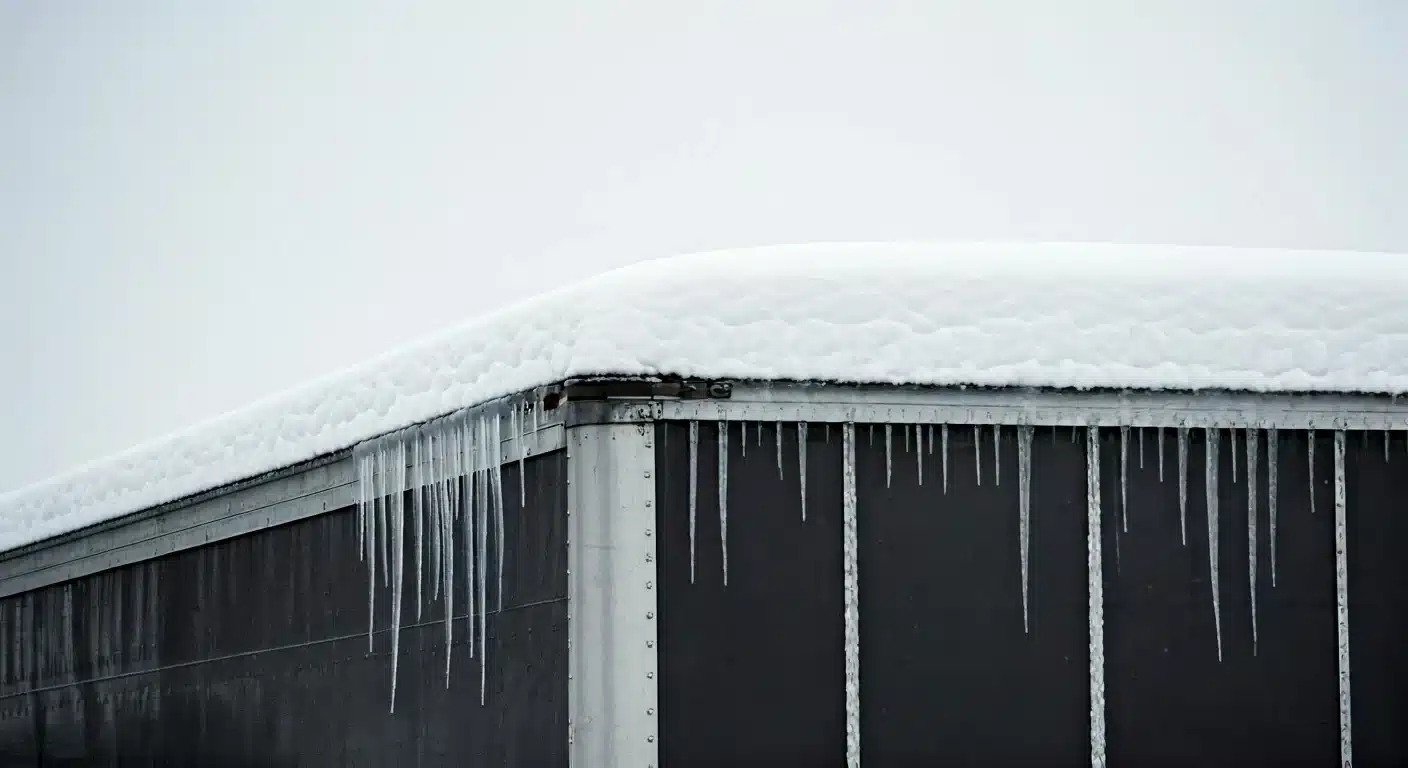
Winter weather introduces many unique variables to supply chain management; for logistics leaders, winter is a constant battle to protect margins against the natural friction of weather. Snow clearing for yards and facilities is a standard budget item, but one specific variable is often overlooked: trailer-top snow accumulation. Ironically, this is arguably the most important variable as it’s impact reaches well beyond the yard.
The primary risk of this accumulation is, of course, the immediate danger to public safety. A dislodged sheet of ice can shatter windshields and cause severe accidents on the highway, and has been responsible for severe injury and even death. That safety priority is non-negotiable.
But beyond the public hazard there are additional economic and operational consequences that often go undiscussed.
Removal of snow and ice from trailer-tops is often overlooked until it halts operations or introduces liability to an organization. Ignoring snow and ice on fleet vehicles creates distinct financial leaks, including increased fuel consumption, driver downtime, and exposure to catastrophic liability claims.
The Fuel Penalty
A clean trailer is an aerodynamic trailer. When a 53-foot dry van carries a slab of snow and ice, it disrupts the airflow designed to minimize drag. This added surface roughness, combined with the sheer weight of accumulated ice (which can exceed several thousand lbs on a fully covered roof), forces the engine to work harder.
Carrying unnecessary frozen weight is a direct tax on operating efficiency in an industry where fuel economy is measured in tenths of a cent per mile. Clearing the roof restores the vehicle’s intended aerodynamic profile and payload capacity.
Regulatory compliance and unsecured loads
Regulatory bodies across North America are increasingly enforcing “unsecured load” laws to cover snow and ice. Drivers face fines, points on their licenses, and being placed out of service if law enforcement identifies significant accumulation on their vehicle. Examples include Jessica’s Law in New Hampshire and Christine’s Law in Pennsylvania. These regulations establish strict penalties for non-compliance.
As per the STAA a driver also has the right to refuse to leave the yard if they reasonably consider conditions to be dangerous. This includes hazards posed by accumulated snow and ice on their trailer-top.
Driver and operational downtime
But it’s unacceptable to request the driver remove the snow and ice themselves. First, a driver’s value lies in their ability to move freight, not in clearing snow. When a driver is forced to spend an hour attempting to clear a roof using makeshift tools, that is an hour of lost utility from a trainer professional in their field, who’s time is better spent doing what they were trained to do (drive).
Second, asking drivers to climb a ladder in freezing conditions to manually clear a 13-foot-high roof is a significant workplace safety risk. It also introduces the potential for falls and WCB claims: falls from heights are a leading cause of Workers’ Compensation claims in the transportation sector. A single injury claim from a driver slipping off a trailer or ladder far exceeds the cost of hiring professionals for the entire season.
Professional removal transfers this risk away from the carrier. It ensures that when a driver performs their pre-trip inspection, the roof is already compliant. These teams enter distribution centers and truck yards to clear units in place, and the process allows the logistics schedule to proceed without interruption. The truck is cleared, the driver is safe, and the load moves on time.
Brand reputation
A trailer is a moving billboard. In the age of dashcams and social media, footage of a branded truck shedding ice on the highway spreads instantly. Even if only by word of mouth, opinions and news can quickly spread especially if a driver is directly impacted by reckless lack of snow removal.
Public perception matters, and a clean fleet signals professionalism and operational discipline. It also demonstrates respect for the driving public and protects hard-earned brand equity.
The JMC protocol
We approach snow removal as a precise industrial service. Our teams monitor weather patterns to predict accumulation levels at specific yards.
- Timing: Crews deploy overnight or early morning to align with fleet departure schedules.
- Technique: Specialized equipment removes bulk snow without damaging the trailer roofing membrane.
- Documentation: We provide visual confirmation that the risk has been mitigated.
Trailer top snow and ice is a preventable hazard. Managing it requires the same level of seriousness applied to any other part of fleet maintenance.