In the commercial logistics sector, a clean fleet is about more than brand image. It is a fundamental component of preventative maintenance and risk mitigation. At JMC Enterprises, we see the footprint left by the road: a corrosive mix of chemicals, grime, and environmental pollutants that actively degrades your equipment every mile it rolls.
Whether it is mid-winter brine or summer road film, regular professional washing is the only way to stop the chemical attack on your bottom line.
1. The Cost of Corrosion: A $2 Billion Problem
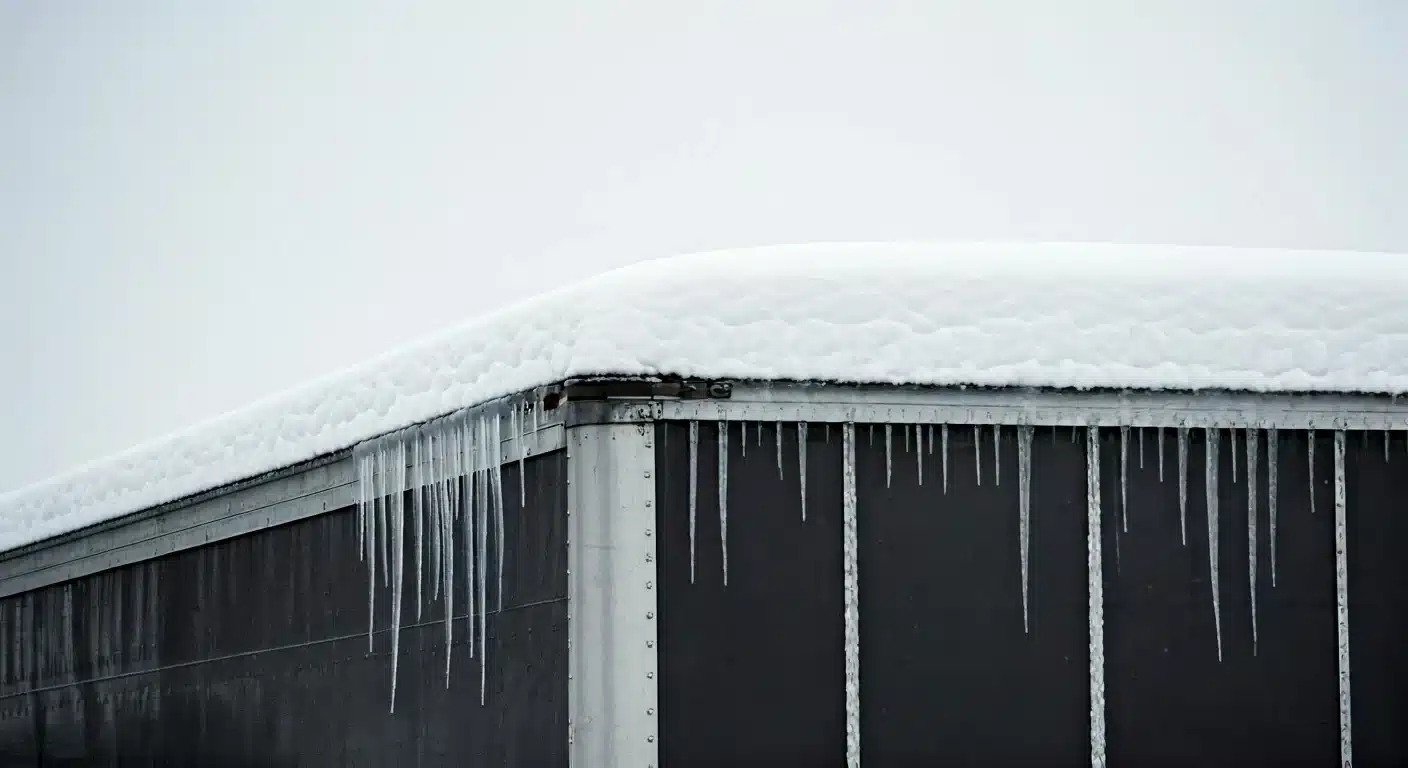
Corrosion is a silent thief. While the Salt Belt is famous for destroying chassis, modern liquid de-icers (like magnesium and calcium chloride) are hygroscopic, meaning they pull moisture from the air even on dry days, continuing the corrosion process year-round.
- Financial Impact: Research from the ATA’s Technology & Maintenance Council (TMC) suggests that corrosion-related expenses cost the U.S. trucking industry over $2 billion annually in premature equipment retirement and emergency repairs.
- The Brine Effect: Modern brines are designed to stick to the road, which makes them nearly impossible to remove with a standard rain shower or a basic brush wash. They require targeted high-pressure mitigation to neutralize.
2. Aerodynamics and the Dirty Truck Tax
A dirty trailer is an aerodynamic liability. Road film (a cocktail of diesel soot, oil, and dust) creates microscopic surface turbulence that disrupts laminar airflow.
- Fuel Efficiency: Industry studies on heavy-duty vehicle aerodynamics indicate that a clean, smooth vehicle can achieve 2% to 3% better fuel economy than one coated in road grime.
- Weight Management: Accumulated debris in “Hot Zones” like trailer slider frames and wheel wells can add hundreds of pounds of unnecessary weight to a tractor-trailer, forcing the engine to work harder for the same result.
3. High-Stakes Inspection Hot Zones
Cleanliness directly impacts your CSA (Compliance, Safety, Accountability) scores. A grime-covered truck is a magnet for roadside inspectors because it suggests a lack of maintenance oversight.
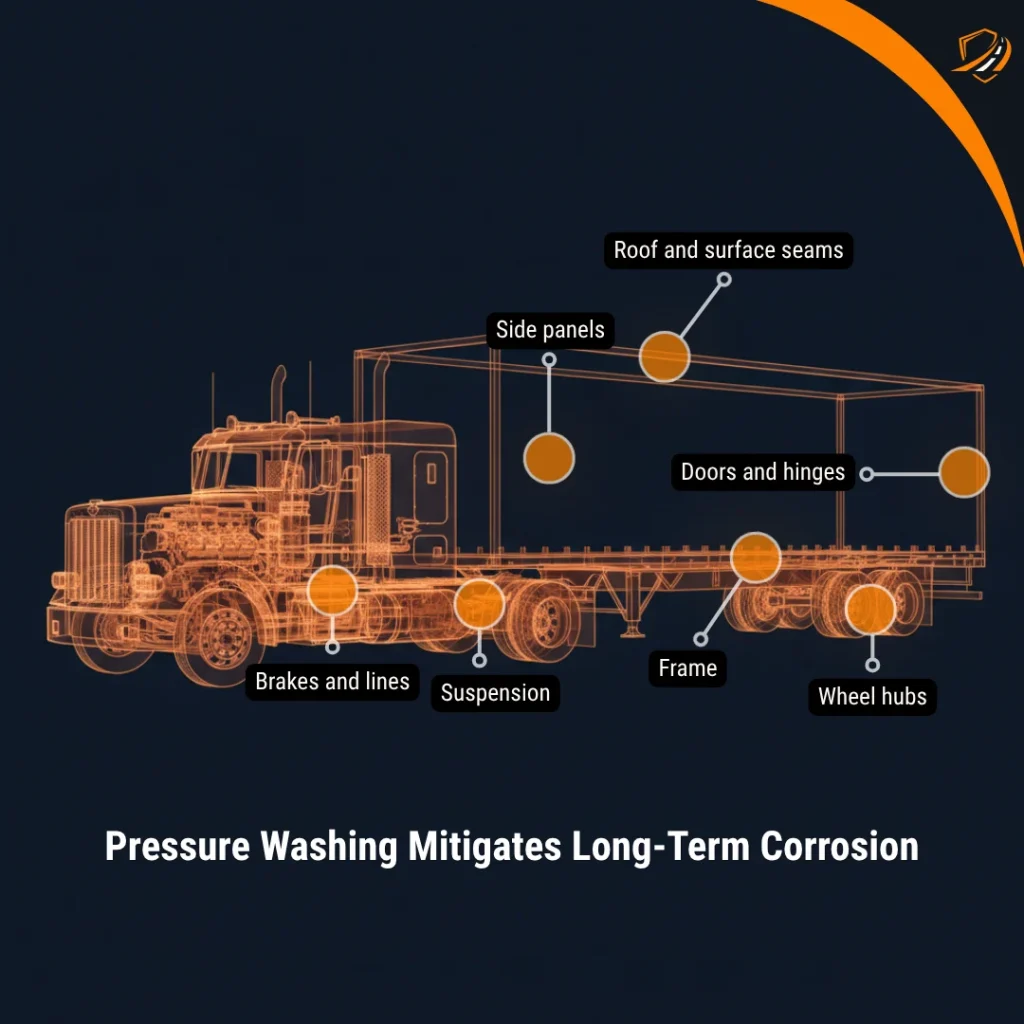
| Component Group | The Operational Risk |
| Brakes & Lines | Salt buildup hides cracks in air lines and corrodes hardware, leading to sudden failure warnings from the NHTSA. |
| Wheel Hubs | Grime degrades seals and bearings; if a seal fails due to debris, the resulting bearing failure can lead to wheel-off incidents. |
| Trailer Sliders | Corrosion seizes the slider frame, preventing drivers from safely adjusting weight distribution for legal compliance. |
| Electrical Systems | Salt is a conductor. It wicks into wiring harnesses, causing phantom shorts and light failures that lead to preventable tickets. |
The JMC Solution: Professional Mitigation
At JMC Enterprises, we don’t just wash trucks; we protect logistics assets. Our process targets the hidden areas where corrosion hides, ensuring your fleet remains safe, compliant, and efficient in every season.
Industry Sources:
- American Trucking Associations (TMC): Corrosion: Complaint, Cause & Correction Manual
- NHTSA: Vehicle Safety Research and Corrosion Reports
- National Academies of Sciences: Reducing Fuel Consumption of Medium- and Heavy-Duty Vehicles
- NACE International: IMPACT Study: The Global Cost of Corrosion
- U.S. Dept of Energy: Vehicle Parts and Equipment to Conserve Fuel